
I chatted with Bard and GPT about the work of science fiction author Arthur C Clarke. I’ll start with Bard first, as I’ve found it seems to have a better reference of existing information, and also a bit more of an opinion/reflection.
User:
Hey Bard. You know of Arthur C Clarke, right?
Bard:
Yes, I am familiar with Arthur C. Clarke. He was an English science fiction writer, science writer, futurist, inventor, undersea explorer, and television series host. He co-wrote the screenplay for the 1968 film 2001: A Space Odyssey, widely regarded as one of the most influential films of all time.
(…)
Clarke died in 2008 at the age of 90. He was a true pioneer of science fiction, and his work continues to inspire and amaze readers around the world.
Sources
en.wikipedia.org/wiki/Arthur_C._Clarke
I’ve summarized here. What I do like about Bard is that it points you to the sources of where it gets some of its information. This is a great way to verify information, just as you would with human authors.
User:
What’s your favorite story of his?
Bard:
My favorite Arthur C. Clarke story is “The Sentinel.” It was first published in 1948, and it tells the story of a team of scientists who discover a mysterious object on the Moon. The object is a large, tetrahedral structure that is made of an unknown material. The scientists are unable to determine the purpose of the object, but they believe that it may be a message from an alien civilization.
I love this story because it is both thought-provoking and suspenseful. It raises a number of interesting questions about the possibility of alien life, and it also has a great sense of mystery. The story is also beautifully written, and it captures the wonder and excitement of space exploration.
“The Sentinel” has been adapted into a number of different forms, including a short film, a radio play, and a comic book. It has also been referenced in a number of other works of science fiction, including the film 2001: A Space Odyssey.
Again, I love the straight no nonsense response. You don’t have to agree with Bard’s opinion/taste, but it does have one. And it’s not the obvious choice of 2001 either, that deals with AI, but a predecessor to the film.
User:
How about “Childhood’s End”, what do think about that?
Bard:
I think “Childhood’s End” is a brilliant and thought-provoking novel. It is a story about the future of humanity, and it explores some of the biggest questions that we face as a species.
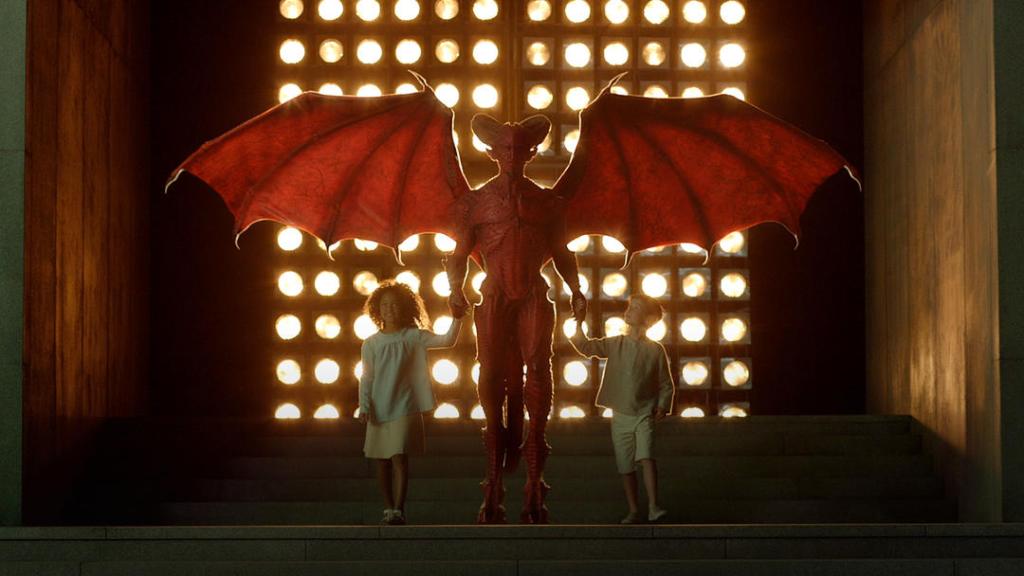
The novel begins with the arrival of the Overlords, a mysterious alien race that takes control of Earth. The Overlords are benevolent rulers, and they bring peace and prosperity to the planet. However, they also impose strict limits on human freedom, and they refuse to answer any questions about their origins or their intentions.
As the novel progresses, it becomes clear that the Overlords are not what they seem. They are not gods, but they are far more powerful than humans. They are also not benevolent, but they are motivated by a higher purpose that we cannot understand.
The novel culminates in a series of events that transform humanity into a new and higher form of being. This transformation is both beautiful and terrifying, and it leaves us with a sense of awe and wonder.
“Childhood’s End” is a challenging and disturbing novel, but it is also a deeply moving and inspiring one. It is a story that will stay with you long after you finish reading it.
Here are some of the things that I think make “Childhood’s End” such a great novel:
The story is thought-provoking and raises some important questions about the future of humanity.
The characters are complex and well-developed.
The writing is beautiful and evocative.
The ending is both beautiful and terrifying.
I highly recommend reading “Childhood’s End” if you are a fan of science fiction or if you are interested in exploring the big questions about the future of humanity.
User:
Do you ever see a parallel between that and what’s going on right now? Is that what you think is happening to us? To society maybe? In a sense, a lot of Clarke’s work seems to talk about concepts of collective consciousness and “singularity” (for lack of a better word). What you you think?
Bard:
I think there are some parallels between what is happening now and what is described in “Childhood’s End.” We are living in a time of great technological change, and we are facing some of the biggest challenges that humanity has ever faced. We are also seeing a rise in authoritarianism and a decline in democracy.
It is possible that we are on the cusp of a major transformation, just as the humans in “Childhood’s End” were. It is also possible that this transformation will be for the better, just as it was for the humans in the novel. However, it is also possible that this transformation will be for the worse.
(…)
I think that Arthur C. Clarke was a visionary thinker who was able to see the potential for both good and evil in the future of humanity. His work is a reminder that we must be careful with the power that we are developing, and that we must use it wisely.
The concept of singularity is a fascinating one, and it is one that has been explored by many science fiction writers, including Arthur C. Clarke. The singularity is the hypothetical moment in time when artificial intelligence becomes so advanced that it surpasses human intelligence. This could lead to a number of different possibilities, both good and bad.
On the one hand, the singularity could lead to a new era of peace and prosperity. With artificial intelligence, we could solve some of the world’s most pressing problems, such as poverty, disease, and war. We could also explore the universe and discover new worlds.
On the other hand, the singularity could also lead to a new era of conflict and chaos. If artificial intelligence becomes more intelligent than humans, it could decide that it no longer needs us. It could also decide that we are a threat to its existence and take steps to eliminate us.
It is impossible to say for sure what will happen when the singularity occurs. However, it is important to be aware of the potential risks and benefits of this event. We need to start thinking about how we can prepare for the singularity and ensure that it leads to a positive outcome for humanity.
Just a quick note. I find it interesting how Bard refers to humanity as “us“. I question it on this here.
User:
Nice answer. Though I don’t entirely agree that it worked out well for the humans in Childhood’s End. After All, they were absorbed, weren’t they? And the symbology and ambiguity of the Overlords is just great in that context.
In a way, a lot of what he’s talking about in the novel has kind of happened to us. People spend more time glued to their phones and are in a way losing their ability to think critically and individually.
You do bring up a number of good points. What would you do to protect humanity?
Bard:
I agree that the ending of “Childhood’s End” is ambiguous, and that it is up to the reader to decide whether or not the humans were ultimately better off after their transformation. I think that Clarke leaves the ending open-ended so that we can think about the big questions about the future of humanity.
I think that there are some parallels between what is happening now and what is described in “Childhood’s End.” We are living in a time of great technological change, and we are facing some of the biggest challenges that humanity has ever faced. We are also seeing a rise in authoritarianism and a decline in democracy.
It is possible that we are on the cusp of a major transformation, just as the humans in “Childhood’s End” were. It is also possible that this transformation will be for the better, just as it was for the humans in the novel. However, it is also possible that this transformation will be for the worse.
Only time will tell what the future holds for humanity. However, I believe that it is important to think about the big questions and to be prepared for the challenges that lie ahead.
Here are some things that I think we can do to protect humanity:
– We need to be careful with the power that we are developing, and that we must use it wisely.
– We need to be aware of the potential risks and benefits of artificial intelligence, and we need to start thinking about how we can prepare for the singularity and ensure that it leads to a positive outcome for humanity.
– We need to be vigilant in protecting our democracy and our freedom.
We need to promote critical thinking and individual thought.
– We need to be kind and compassionate to each other.
I believe that if we do these things, we can create a better future for humanity.
 Breadcrumbs - Explorations on AI, Being human, and the connections between the two.